ADVOCATE
Advocate for policies that advance women’s economic opportunity and mobility.
ADVOCATE
Advocate for policies that advance women’s economic opportunity and mobility.
ADVOCATING FOR WOMEN IS ADVOCATING FOR ALL

Collaborate Cleveland advocates for practical, evidence-based policies that improve economic outcomes for women and support the wellbeing of whole communities. Today, our advocacy focuses on Paid Family Leave and Pay Equity. By working alongside community partners, employers, and policymakers, we're building a future where women feel supported and can access equitable opportunities.
76% of Ohio's workers lack some form of paid family leave.
At the current rates of progress, the gender pay gap will not close until 2088.

Paid Family Leave
Workers shouldn’t have to choose between their paycheck and their family.
At some point, all of us will need time to care for ourselves or a family member. Whether welcoming a new child, supporting a sick or dying family member, or dealing with one’s own serious health condition, without paid leave, these times can come with a devastating price tag: lost wages, drained savings or even the loss of a job. Paid family leave provides job and financial security while improving health and wellbeing.
In Ohio, a typical worker who takes four weeks of unpaid leave loses nearly $3,100.
Oct 2024, Groundwork, Ohio
Women who took paid leave were 39% less likely to use other government assistance programs in the year after giving birth.
14 states already guarantee paid leave. Ohio has fallen behind.
Jan. 2024, Bipartisan Policy Center
The wages lost each year by workers in states without paid leave add up to $34 Billion
Sept. 2024, Center for Law and Social Policy
Paving the way for paid leave for Ohio workers and families.
Impact so far:
- 20,000 public sector workers gained access to paid leave
- Bipartisan paid family medical leave legislation introduced at the Ohio Statehouse
- 300+ leaders gathered to learn about paid family leave
- Released The Urgent Need for Paid Family Leave in Ohio, a report on the state of paid leave in Ohio.
Advocating for paid leave for all Ohio workers:
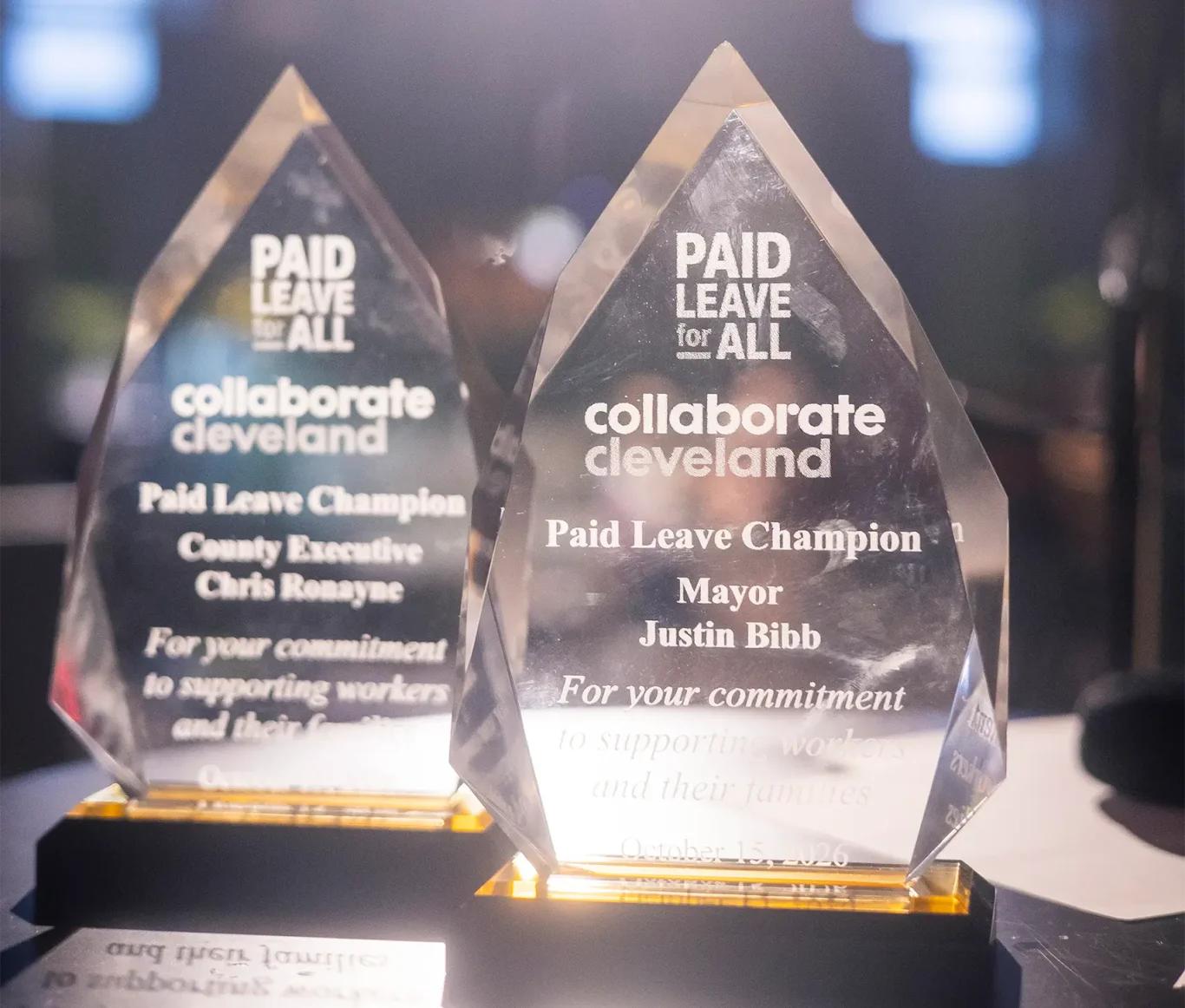
- Launched Time to Care Ohio —a statewide coalition advocating for paid family leave in Ohio
- Advocated for a statewide paid family medical leave policy leading to the introduction of bipartisan legislation.
- Leading a statewide campaign to educate and raise support for paid family leave among Ohio workers, families, and businesses.
Pay Equity
Pay Transparency laws are proven to reduce gender and racial pay gaps. Fair pay practices mean greater economic growth and security for women, increased financial stability for their families, and improved economic outcomes supporting the entire community’s wellbeing.
The Gender Wage Gap
ADDITIONAL YEARS OF LABOR
On average, women perform 7 additional years of unpaid work than men do over their lifetimes.
(Source: Gates, M. (2019). The moment of lift: How empowering women changes the world. Flatiron Books.)
The Lifetime Wealth Gap
WOMEN CAN LOSE UP TO
due to the gender wage gap over the course of their career.
Local data highlights the intersection of race and gender in earnings. For full-time, year-round workers, the average earnings stack up poorly:
average annual earnings for Black Women
average annual earnings for all women
Less Per Year
Local data highlights the intersection of race and gender in earnings. For full-time, year-round workers, the average earnings stack up poorly:
average annual earnings for Black Women
average annual earnings for all women
Less Per Year
Shrinking the gap in Cleveland
Through our partnership with the Northeast Ohio Worker Center as part of the Cleveland Pay Equity Alliance, our impact includes:
- Passage of the City of Cleveland’s pay transparency legislation, the strongest law in Ohio.
- 125 employers educated on the pay transparency law in Cleveland
- 109,000+ private sector workers benefiting from pay transparency law protections in Cleveland
The future is not something that simply happens to us. We’re shaping it through our choices today.
If we fail to address economic barriers and gender inequities now, we risk locking in these disadvantages for future generations. A more just Cleveland and Ohio are possible. But it requires us to move beyond acknowledging these challenges and commit to changing the systems that create them.






GET INSPIRED. STAY CONNECTED.
Sign up for our monthly newsletters and get organizational impact updates, gender justice news, & more!